

Professional workflows · 8 min read
Roman Numerals, Bates Numbers, and Report Pagination
Use the right numbering convention for reports, academic front matter, evidence, and production sets.
Choose numbering that matches the document
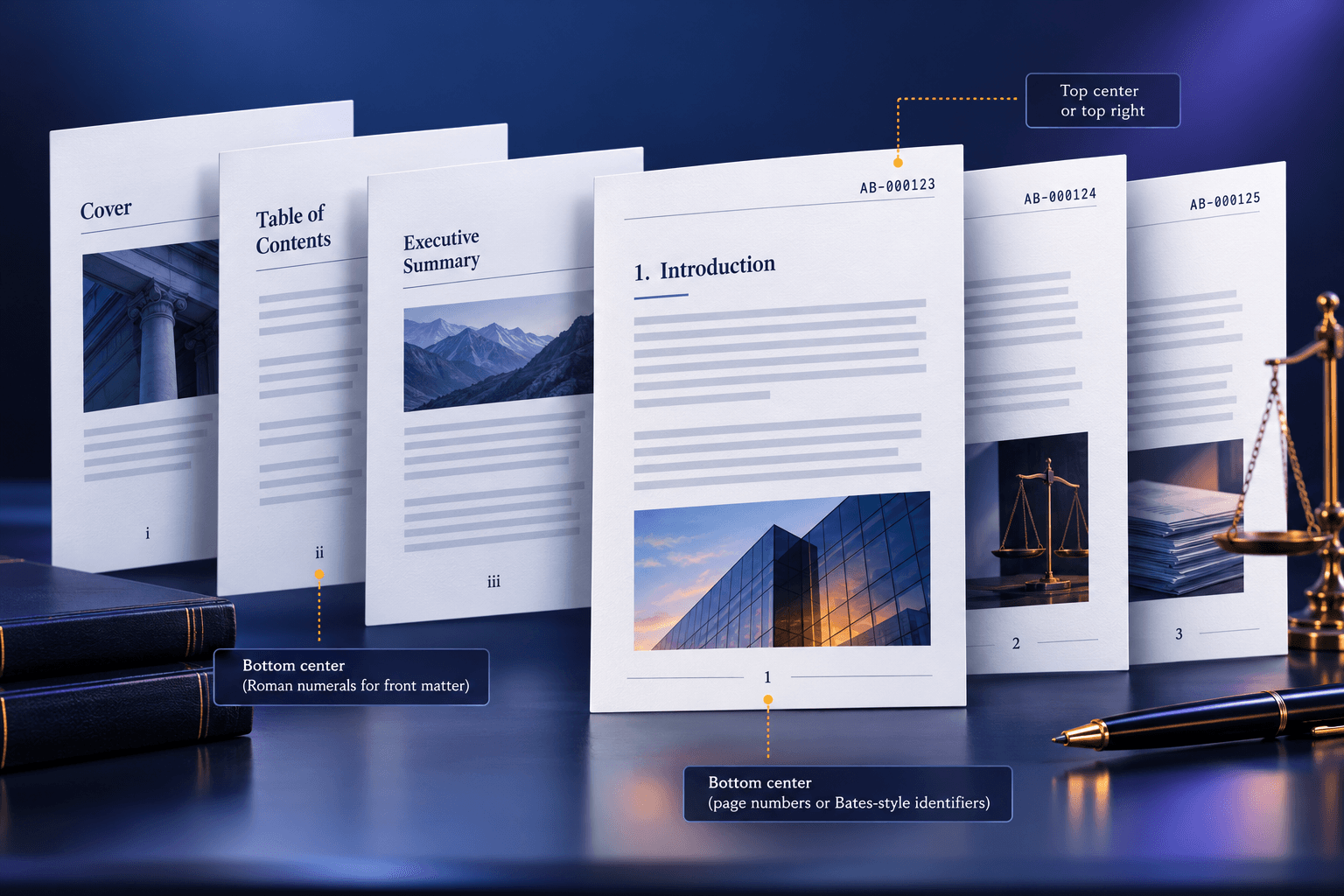
Plain Arabic numerals suit most reports. Roman numerals are commonly used for front matter such as a preface or table of contents. Bates numbering produces fixed-width sequential identifiers with optional prefixes and suffixes for controlled document sets.
A number printed on a page is not the same as the PDF viewer’s internal page label. Tell recipients which convention you use when the two do not match.
Build reliable Bates identifiers
Choose a stable prefix that identifies the matter or production, a starting number approved for the set, and enough padding for its expected size. Preview the resulting pattern before processing.
Avoid reusing an identifier range across different productions. PDFStack can place identifiers, but it does not manage an organization-wide Bates register or prove legal sufficiency.
- Document the allocated range.
- Keep prefix and padding consistent.
- Check the first and last identifier.
- Retain the authoritative source files.
Handle covers, front matter, and appendices
If a report needs separate Roman and Arabic sections, process a copy of each section with the correct settings, then combine the results in the intended order. Verify transitions and the table of contents after merging.
For formal, legal, archival, signed, or accessible documents, confirm the output with the responsible reviewer before treating it as authoritative.
Questions about this workflow
What is Bates numbering?
It is a sequence of fixed-width identifiers, often with a prefix or suffix, used to identify pages in controlled document sets.
Can one run mix Roman and Arabic numbers?
Use separate passes for the relevant page groups, then verify the combined document and its transitions.